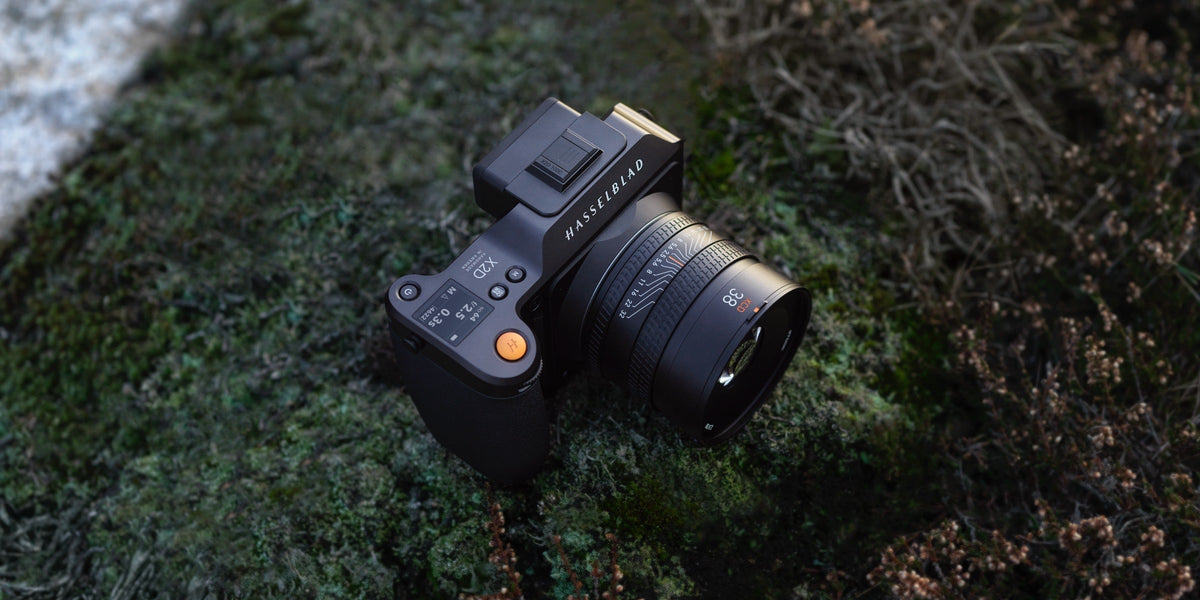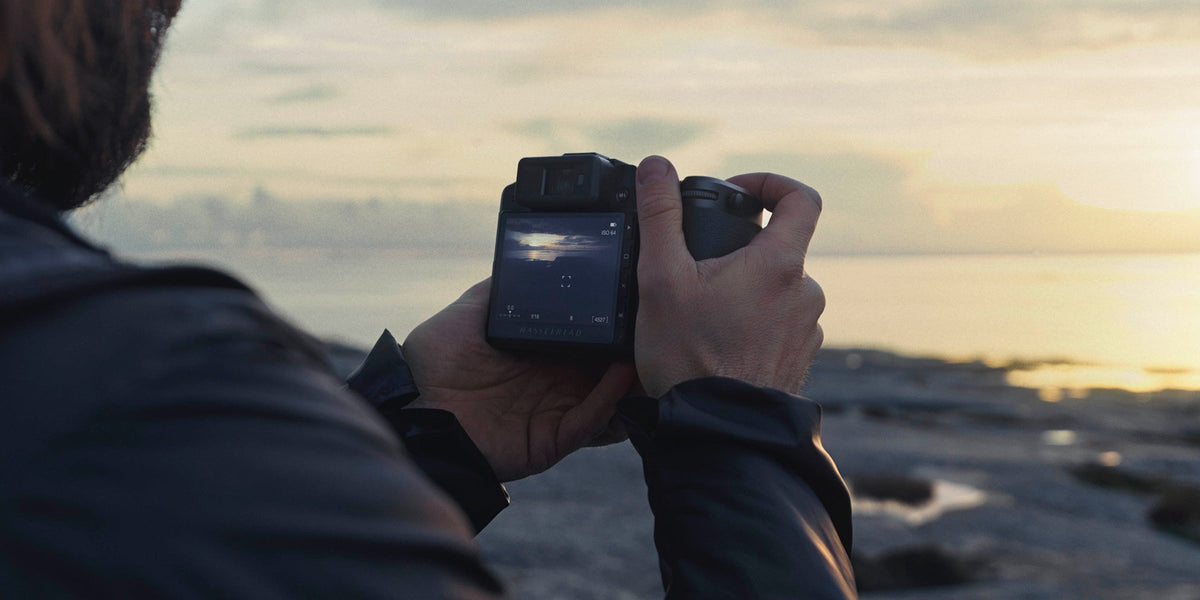
A high dynamic range preserves more detail between bright highlights and deep shadows within a single shot. Bright areas retain detail, dark parts remain well separated, and subtle tonal transitions are preserved for creative editing later on.
In medium format, this creates generous latitude for landscapes, portraits, studio work, and personal projects. This flexibility becomes particularly apparent with high-contrast subjects, careful RAW processing, and large prints. However, it can already help at the moment of shooting to shape light, colour, and spatial depth more deliberately.
Dynamic range is no substitute for precise exposure. Instead, it preserves more of what was present at the moment of capture and keeps different interpretations of the image open.
What Does Dynamic Range Mean in Photography?
Dynamic range describes the brightness span that a camera can capture in a single image. It spans from the brightest area with discernible detail to the darkest area where usable image information is still present.
Dynamic range is measured in f-stops. Each additional aperture stop doubles the amount of light that can be captured. However, the number on its own does not fully describe overall image quality. It is also crucial how accurately colours, tonal values, and noise are rendered within this range.
A landscape with a bright sky and dark foreground, for example, has very high scene contrast. Subject contrast describes the brightness range within a scene. The camera's dynamic range, on the other hand, describes how much of this the sensor can capture in a single shot.
If the available range is too small, very bright areas lose their detail, or dark parts of the image contain only a few usable pieces of information. A RAW file with greater reserves can be edited with more control because more gradations between these two extremes are preserved.
Why Can Medium Format Offer Particularly Extensive Tonal Reserves?
Medium-format systems can offer exceptionally wide tonal reserves when sensor architecture, base sensitivity, noise characteristics, colour depth, and RAW processing are carefully tuned to work together.
Sensor size alone does not guarantee a specific dynamic range. Even a larger sensor cannot, on its own and regardless of its technical design, determine the quality of an image. What matters is the overall recording system.
Modern medium-format sensors, however, provide a powerful foundation for high resolution, subtle tonal gradations, and extensive RAW files. A high colour depth helps make the captured information usable in nuanced brightness and colour gradations.
This is particularly important in situations where subtle differences shape the impact of the image. This includes transitions in skin tones, clouds, fabrics, painted surfaces, glass, metal, and deep shadow areas.
Greater dynamic range does not mean that every exposure mistake can be corrected afterwards. Completely blown-out highlights contain no recoverable detail. Even heavily underexposed shadows can show visible noise when brightened.
The real value therefore does not lie in rescuing a poorly controlled shot afterwards. It lies in the creative latitude of a precisely exposed file.
What Difference Does High Dynamic Range Make in an Image?
High dynamic range mainly changes how fully lighting conditions, materials, and spatial transitions are preserved within an image.
Preserving Detail in Bright Areas

@Hang Yu
A wide dynamic range helps preserve detail in bright areas of the image. This includes clouds, snow, skin highlights, glass surfaces, metal, and directly lit areas.
Without sufficient latitude, these areas can turn into uniform white patches. Form, material, and lighting design can then no longer be perceived.
If the detail is preserved, brightness can be carefully adjusted during RAW editing. The light still appears intense, without losing its subtle gradations.
Especially with backlighting and reflective surfaces, this control ensures that brightness appears not just as a white spot, but as an integral part of the image composition.
Render Shadows with Nuance
A wide dynamic range preserves more gradations and detail in the darker areas of an image. Shadows therefore no longer appear merely as solid black areas.
In a landscape, rocks, vegetation, or buildings in the foreground can retain clear detail, even when the sky is significantly brighter. In a portrait, you can clearly distinguish dark clothing, hair, and background areas from one another.
Shadows do not need to be completely brightened. Depth and darkness can be an essential part of how an image feels.
The additional leeway instead allows for a deliberate choice. Photographers can decide which areas to reveal and which to keep visually calm.
Maintain Smooth Colour and Tonal Transitions
A wide dynamic range enables smooth transitions between different levels of brightness. These transitions influence how naturally light, volume, and spatial depth are perceived.
In a portrait, this concerns the transition from a lit section of skin into the shadows. In a landscape, the same effect appears in clouds, water, mist, or along a horizon that gradually grows darker.
Colour gradients also benefit from a more nuanced source file. Subtle variations within a shade of blue, a neutral area, or a warm skin tone remain easier to distinguish from one another.
The result does not necessarily look more contrasty. Often, the real strength lies in a more subtle, calmer, and easier-to-follow gradation.
Where Does High Dynamic Range Become Particularly Noticeable?
High dynamic range becomes particularly noticeable when a subject features large differences in brightness, fine surface details, or demanding gradations in tone.
Landscape and Available Light Photography
Landscape and available light photography benefit greatly from wide exposure latitude, because the existing light often cannot be fully controlled.
At sunrise and sunset, a bright sky often contrasts with a significantly darker foreground. A wide dynamic range helps preserve the lighting mood within a single RAW file.
Clouds can retain their texture, while rocks, water, or vegetation in the shade are still rendered with clear detail. This preserves both the mood of the light and the spatial layering of the scene.
Similar conditions occur indoors with windows, in narrow streets with direct sunlight, or in overcast landscapes with bright reflections on water and snow.
A wide dynamic range can reduce the need for exposure bracketing in these situations. However, if the scene contrast exceeds the sensor's dynamic range, capturing multiple exposures can still be worthwhile.
Portraits, Studio Work, and Materials
Portrait and studio shots benefit from a wide dynamic range, as it allows fine skin tones, controlled highlights, and different material surfaces to be clearly distinguished from one another.
Controlled studio lighting does not automatically mean low subject contrast. Highlights on skin, glass, or metal can sit right next to deep shadows.
With a portrait, a richly detailed RAW file helps you shape the transitions between lit areas of the face and the shadows in a controlled way. Retouching gains more depth without making brightness transitions unnecessarily harsh.
In product photography, having extra dynamic range is especially important for paint, metal, glass, and polished surfaces. Bright highlights can retain their shape, while darker material areas still show detail.
In art reproduction and colour-critical studio work, a stable tonal range supports a faithful rendering of the original. Precise lighting and a controlled colour workflow remain essential.
Travel and Personal Projects
Travel shots and personal projects benefit from a wide dynamic range, because many of their lighting conditions cannot be recreated.
A bright square, a dim interior, a backlit portrait, or a street scene shifting between sun and shade cannot always be planned in every detail. A file with ample latitude preserves more options for creative work later on.
Even personal photos can benefit from nuanced tonal reproduction. Family portraits, familiar spaces, and long-term photographic projects do not need to serve a commercial purpose to be captured with great care.
Perhaps an image is viewed only in digital form at first. Later on, it may become part of a photo book, an archive, or a larger print.
In such cases, the value of dynamic range lies not only in the immediate output. It also lies in preserving the image's future potential.

@Albrecht Voss
How Can You Preserve Dynamic Range Throughout Your Workflow?
Dynamic range is best preserved when exposure, RAW capture, lens, colour management, and output are treated as one continuous process.
Exposure and RAW Capture
Controlled exposure is the foundation for a usable dynamic range. The aim is to preserve important highlights without underexposing the shadows more than necessary.
Histogram and overexposure warning help you assess the brightness distribution of a shot. They do not replace the creative vision behind the image, but they do indicate whether important highlights are already beyond the recordable range.
RAW files retain significantly more of the information captured by the sensor than a fully processed and heavily compressed output format. This allows highlights, shadows, white balance, and local tonal values to be adjusted more precisely at a later stage.
The greatest dynamic range is usually available close to the sensor's native base sensitivity. With higher ISO settings, the usable margin can decrease. The specific effect depends on the individual sensor and the exposure.
A bracketed exposure series remains a possible way to supplement the shot for subjects with extreme contrast. It should, however, not be used automatically. If a single RAW file already contains sufficient detail in highlights and shadows, it enables a simpler, more natural workflow.
Lens, Lighting, and Output
A lens does not create dynamic range. However, it does affect how clearly contrasts, fine details, and tonal values are rendered on the sensor.
Scattered light and internal reflections can reduce local contrast. A carefully calculated lens design helps preserve subtle transitions and material textures in a clear, faithful way.
Hasselblad XCD 2.8–4/35–100E covers an actual focal length range from 35 to 100 mm. This corresponds to approximately 28 to 76 mm in the 35 mm format. The range extends from wide-angle to medium telephoto, making it suitable for landscape, travel, portrait, and studio photography.
The optical design comprises 16 elements in 13 groups, including three aspherical elements and five ED elements. The integrated leaf shutter supports exposure times from 1/4000 second to 68 minutes, and enables flash synchronisation across the entire range of shutter speeds.
Especially in the studio or for portraits in bright ambient light, this flash synchronisation enhances your control over subject contrast. Fill light can be used selectively, without having to change the desired aperture just because of a limited sync speed.
[cta: https://store-eu.hasselblad.com/de/products/xcd-2-8-4-35-100e]
After the shot, the colour workflow determines how much of the tonal latitude remains visible in the final output. A calibrated monitor, an appropriate working colour space, and editing tailored to the output medium help you assess the file reliably.
Large prints make subtle differences especially visible. Nevertheless, dynamic range is relevant not only for print. Digital images also benefit from controlled tonal transitions, precise cropping, and careful editing.
How does Hasselblad translate dynamic range into image design?
Hasselblad harnesses dynamic range by aligning the sensor, colour reproduction, stabilisation, and operation with a precise photographic workflow.
X2D II 100C: High tonal latitude in an integrated system
Hasselblad X2D II 100C combines a 100 MP medium-format BSI CMOS sensor measuring 43.8 × 32.9 mm with 16-bit colour depth, native ISO 50 sensitivity, and a dynamic range of up to 15.3 stops.
HNCS HDR supports a natural and nuanced rendering of colours and tonal values. The technology is designed to preserve transitions in highlights, shadows, and colours in a comprehensible way, without imposing a predefined look on the image.
The in-camera 5-axis image stabilisation, according to the manufacturer, compensates for up to 10 stops. This means the high resolution can be used even in situations where a tripod is not available, or where you need to keep the shooting process flexible.
An integrated 1 TB SSD and an additional CFexpress Type B slot make it easy to handle large image files directly in the camera.
X2D II 100C is therefore not only suitable for controlled studio work. It combines extensive tonal latitude with a seamless digital workflow for landscape, portrait, travel, and personal projects.
[cta: https://store-eu.hasselblad.com/de/products/x2d-ii-100c]
907X & CFV 100C: Dynamic range in a modular design
Hasselblad 907X & CFV 100C combines a modular camera design with a 100 MP BSI CMOS sensor in a 43.8 × 32.9 mm format, 16-bit colour depth, and a dynamic range of up to 15 stops.
Hasselblad Natural Colour Solution supports natural colour reproduction and smooth tonal transitions. The system is aimed at photographers who want to construct their image composition deliberately while integrating different photographic approaches into a digital workflow.
The CFV 100C digital back can be used with the 907X body. It also supports virtually all cameras and lenses of the V System from 1957 onwards, with the exception of the original SWC. For H, V, and XPan lenses, the respective dedicated adapters are required.
This modular design means the system is not limited to studio or fine art photography. It also opens up a more deliberate approach to portraiture, architecture, still life, landscape, and long-term personal projects.
907X & CFV 100C thus brings together classic camera tradition and contemporary image data, without setting one way of working against the other.
[cta: https://store-eu.hasselblad.com/de/products/907x-cfv-100c]
Conclusion: Dynamic range preserves creative options
A wide dynamic range preserves more of the lighting atmosphere present at the moment of capture. Highlights retain detail, shadows remain nuanced, and subtle gradations are preserved for creative editing later.
This creative latitude is particularly evident in high-contrast landscapes, precise studio shots, and large prints. It can, however, be just as valuable in portraits, travel photos, and personal projects.
It is not professional use that determines its significance. What matters most is the care with which an image is captured, edited, and preserved.
In the Hasselblad medium-format system, dynamic range is therefore not just an isolated performance figure. It is part of a carefully balanced interplay of sensor, colour reproduction, lens, and photographic choices.
Technology does not replace the image. It preserves the space in which the image can unfold.
Frequently Asked Questions about Dynamic Range in Medium Format
Can blown highlights in a RAW file be recovered?
Completely blown highlights cannot be recovered, because there is no detailed image information left in those areas. However, RAW files can still retain detail in areas that already look very bright in the initial on-screen preview.
What role does ISO play in dynamic range?
The widest dynamic range is usually available close to the sensor's native base sensitivity. With higher ISO values, the usable dynamic range can decrease. How pronounced this effect is depends on the sensor, exposure, and post-processing.
Is a high dynamic range also relevant for JPEGs?
High dynamic range can also improve JPEG output. However, the finished JPEG offers less flexibility for editing than a RAW file. Anyone who wants to fine-tune lights, shadows, and colours with precision later on will benefit much more from shooting in RAW.
How can I tell if areas are overexposed while I am shooting?
Histogram and overexposure warning indicate whether important parts of the image might exceed the recordable brightness range. The indicators should be assessed in relation to the scene, as small light sources or reflections may intentionally be left without detail.