Light is captured on a surface. Their size affects how finely a camera can render colour, texture, and tone.
APS-C, full-frame, and medium-format cameras each offer different strengths for this. The differences become apparent in how details are rendered, in the transitions between light and shadow, in depth of field, and in the way the entire camera system operates. How strongly they stand out in the final image also depends on the lens, focus, exposure, and overall photographic composition.
Most Important Sensor Sizes at a Glance
|
Format |
Typical sensor size |
Crop factor |
Characteristic orientation |
|
Micro Four Thirds |
17.3 × 13 mm |
Approx. 2.0 |
Compact systems and long relative telephoto reach |
|
APS-C |
Approx. 23.5 × 15.6 mm |
Approx. 1.5 |
Balanced combination of mobility and image quality |
|
Full frame |
36 × 24 mm |
1.0 |
Versatile system options and a wide choice of lenses |
|
Medium format |
43.8 × 32.9 mm on the Hasselblad X System |
Approx. 0.79 |
Fine details, nuanced tonal gradations, and generous output |
The 43.8 × 32.9 mm sensor on the Hasselblad X System offers approximately 67 per cent more surface area than a full-frame sensor. This additional sensor area provides the basis for nuanced rendering of light, colour, and fine textures.
Digital medium format does not refer to one single, fixed size. It includes various sensor formats larger than 36 × 24 mm. The format of around 44 × 33 mm that is commonly used today combines a significantly larger image area with cameras that can also be used outside the studio.
The characteristics mentioned describe typical focal points. The actual handling and visual impact depend on the specific combination of camera and lens.
How Sensor Size Shapes Image Quality

@Mengfei Hu
Detail Resolution and Creative Flexibility
The megapixel count indicates how many individual pixels make up a file. The sensor size describes the physical area on which this information is recorded.
Combined with a high-resolution sensor and a precisely calibrated lens, a larger image area can preserve exceptionally fine detail. In a portrait, this applies to individual hairs, the texture of fabrics, and subtle shifts in skin tone. In an architectural shot, surfaces and geometric elements remain clearly defined all the way to the edges of the frame. Landscapes can reveal distant details without losing their atmospheric calm.
Its practical value becomes most apparent during demanding post-processing. A high-resolution image can be cropped for different formats, carefully retouched, and printed at a large size, while preserving the visual structure of the picture.
Resolution, then, is not just a matter of image size. It preserves options for later creative work.
Tonal Values, Colour, and Dynamic Range
Image quality often reveals itself in the transitions.
Daylight moves across a face. A bright cloud keeps its detail, while the landscape beneath it retains its depth. Glass, metal, wood, and textiles each respond differently to the same light source. When these subtle differences are captured with precision, the image gains a natural sense of presence.
Colour quality does not mean maximum saturation. What really matters is how clearly neighbouring hues are separated from one another. This is especially true for skin, foliage, stone, painted surfaces, and subtle colours in interior spaces.
X2D II 100C records with 16-bit colour depth and, at ISO 50, offers a dynamic range of up to 15.3 stops. Hasselblad Natural Colour Solution supports natural, consistent colour reproduction, without imposing a preconfigured look on the image.
These reserves carry over into post-processing. Exposure, contrast, and colour can be adjusted with precision, while subtle tonal gradations and the character of each material are preserved.
Image Quality in Low Light
In low light, subtle differences in brightness shape the mood of an image. Dark fabrics should remain distinguishable, shadows should retain their colour and texture, and individual light sources should blend gently into their surroundings.
A larger sensor area provides a generous foundation for this. The result also depends on sensor architecture, lens aperture, exposure time, and stabilisation.
The 5-axis stabilisation of X2D II 100C achieves up to 10 stops of exposure compensation at the centre of the image. Longer exposure times can be used hand-held, as long as subject movement and focal length allow.
This preserves the available light instead of diluting its impact with an unnecessarily bright rendering.
Angle of View, Depth of Field, and Spatial Rendering

@Yifan Yang
Angle of View and Crop Factor
The focal length of a lens remains unchanged, regardless of the sensor format. However, the sensor size determines which portion of the projected image circle the camera records.
The crop factor makes it easier to compare with full frame:
Actual focal length × crop factor = 35 mm equivalent focal length
A 50 mm lens on an APS-C camera with a crop factor of about 1.5 offers roughly the same angle of view as a 75 mm lens on full frame. On the 43.8 × 32.9 mm medium format, the angle of view corresponds to roughly 40 mm in full-frame terms.
For a similar framing, photographers often use a lens with a longer actual focal length on the larger format. This shapes the relationship between subject, focus, and background.
Depth of Field and Spatial Separation
With a similar framing, shooting distance, and aperture, a larger format generally allows for a shallower depth of field. The subject can appear sharply defined, while the background gradually fades into softer layers.
The effect is created by several factors:
- focal length and aperture,
- distance to the subject,
- distance between the subject and the background,
- optical design of the lens,
- size of the recording format.
Perspective is primarily defined by the position of the camera and its distance from the subject. The sensor format influences it indirectly when different focal lengths or shooting distances are chosen for the same composition.
The often-discussed medium format look combines exceptional detail in the plane of focus with smooth tonal gradation and a gentle transition into blur. Its sense of depth is created during shooting through optics, light, and composition.
Interaction Between Sensor and Lens

@Dong Liang
Lens Design and Image Circle
A medium format lens has to illuminate a larger image circle than a lens designed for full frame or APS-C. Its optical design determines how accurately details, contrast, and colours are rendered from the centre of the frame all the way to the edges.
In addition to resolution, what matters is controlling optical aberrations, the clarity of the image edges, and the quality of the transition between sharp and softer areas.
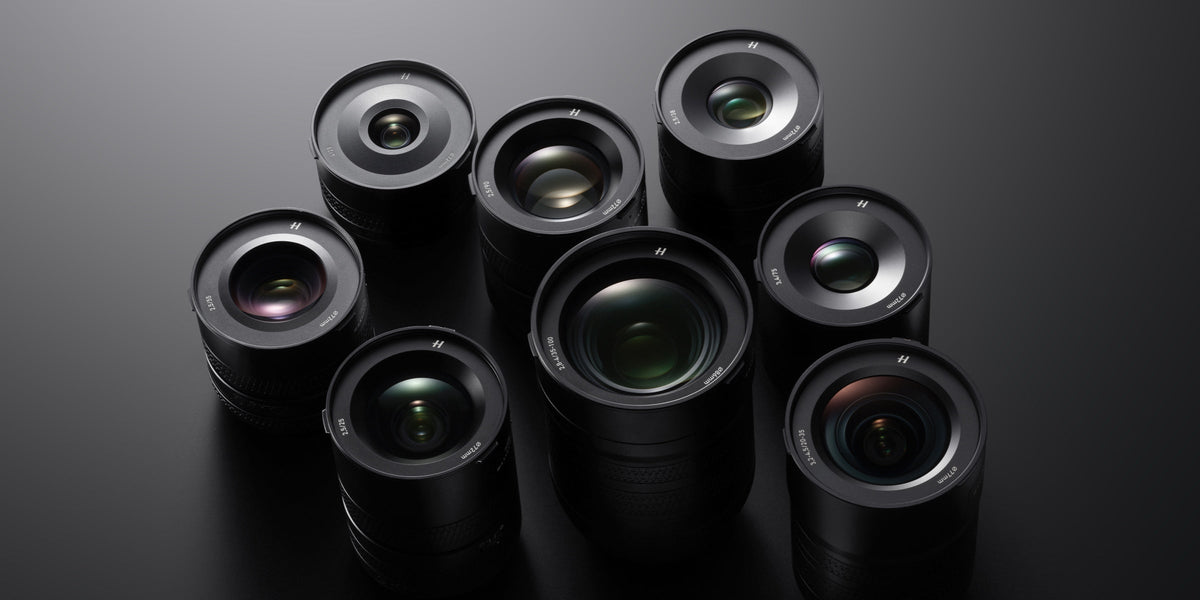
The XCD lenses are tailored to meet the demands of high-resolution medium-format sensors. Different lens series each have their own focus, prioritising light-gathering ability, versatility, or an especially compact design.
The objective remains the same: The technology should respond with precision and interfere as little as possible with photographic observation.
Size, Weight, and Handling
The mobility of a system is defined by the chosen combination of body and lens.
A compact wide-angle lens supports a different way of working than a fast portrait lens or a versatile zoom. The same sensor can thus be part of a lightweight travel setup, a studio configuration, or a flexible kit for shooting on location.
XCD 4/28P weighs 245 g and is 43.5 mm long. Its angle of view is roughly equivalent to a 22 mm lens in full-frame terms. The compact design is well suited, among other things, to landscape, architecture, travel, and street photography.
Image processing is also an integral part of the system. High-resolution files require suitable storage and processing power. In return, they offer greater freedom for retouching, colour grading, cropping, and printing.
[cta: https://store-eu.hasselblad.com/de/products/xcd-28p]
Sensor Formats for Different Photographic Priorities
The choice of format depends on which qualities are most important for the final image and the workflow.
|
Photographic priority |
Common system alignment |
|
Fine detail, nuanced colour, and large-format prints |
Medium format |
|
Versatility, speed, and a wide choice of lenses |
Full frame |
|
Compact kit and well-balanced mobility |
APS-C |
|
Minimal system weight and a large relative telephoto range |
Micro Four Thirds |
This allocation describes focal areas, not fixed fields of application.
Medium format can be used for portrait, landscape, architecture, travel, street photography, and moving subjects. How directly the system responds to a situation depends on autofocus, stabilisation, focal length, and lens weight.
Its special qualities stand out wherever subtle tonal values, natural colour, and precise detail shape the character of an image. This could be a carefully lit portrait, a fleeting street scene, or a landscape in the last light of day.
Full frame offers a wide range of specialised cameras and lenses. APS-C and Micro Four Thirds allow for particularly compact setups, and can offer practical advantages when using long focal lengths.
Each format provides its own tools for pursuing a photographic vision.
Medium Format as a Contemporary Way of Working
X2D II 100C combines a 100 MP BSI CMOS sensor in a 43.8 × 32.9 mm format with 16-bit colour and a dynamic range of up to 15.3 stops.
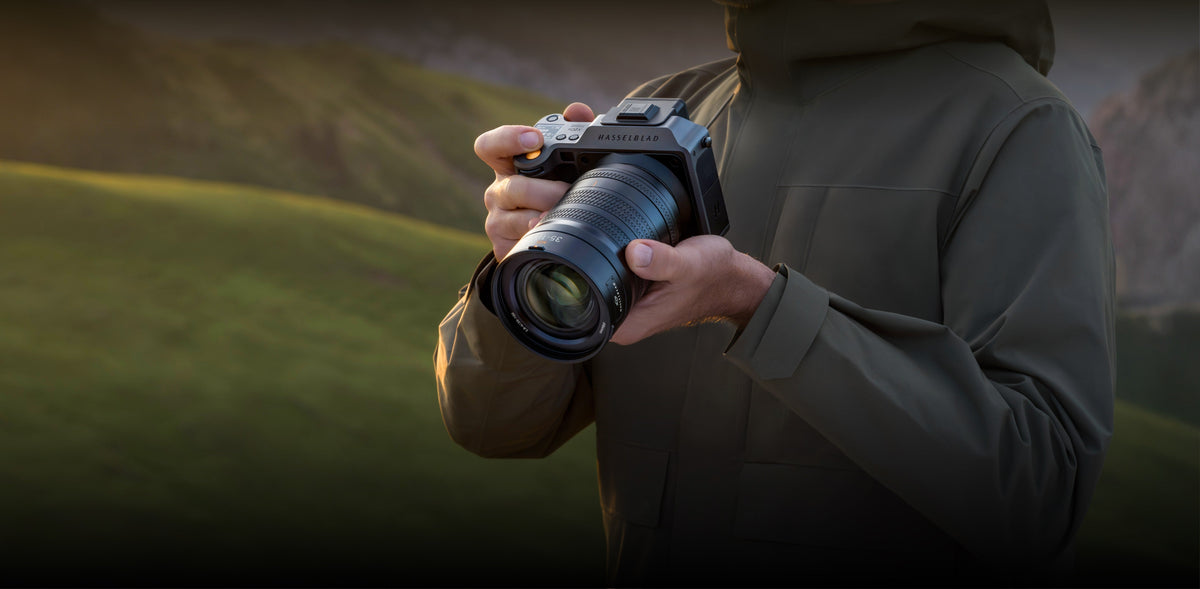
Continuous autofocus, subject detection, and five-axis stabilisation broaden the creative possibilities of modern medium format photography. The camera can be used handheld and respond to changing light or movement, without losing its focus on precise image composition.
The individual functions work together seamlessly. The resolution preserves detail and allows flexible cropping. Colour depth and dynamic range support natural transitions. Autofocus and stabilisation give photographers more freedom in choosing their perspective and the moment.
With a compact XCD lens, you get a system that combines a larger image area with a highly mobile way of working. Its technical precision stays in the background and serves the visual impact of the image.
[cta: https://store-eu.hasselblad.com/de/products/x2d-ii-100c]
Frequently Asked Questions about Sensor Sizes
Is a 44 × 33 mm sensor considered medium format?
Yes. Digital medium format refers to a category, not to one single, fixed set of dimensions. A sensor measuring roughly 44 × 33 mm offers a significantly larger imaging area than a 36 × 24 mm full-frame sensor.
Does a medium-format camera always need a tripod?
No. Modern medium-format cameras can offer powerful image stabilisation, autofocus, and subject detection. Whether using a tripod makes sense depends on the exposure time, focal length, subject movement, and the desired visual effect.
Why is digital medium format smaller than classic roll-film medium format?
Classic medium format includes various film sizes, such as 6 × 4.5, 6 × 6, or 6 × 7 cm. Digital systems do not have to match these dimensions exactly. They all share a larger imaging area than 35 mm full frame.