A 100 MP camera gives you far more freedom for fine details, flexible cropping, and high-quality output. Their value is evident not only in professional productions, but also in travel shots, portraits, and personal projects.
Not every photograph needs the full resolution. A generous resolution reserve keeps options open that do not need to be defined at the moment you press the shutter. A subject can later be re-cropped, rebalanced, or printed in a larger format.
100 MP is no substitute for light or composition. However, they do give you more scope for deliberate photographic decisions. What matters, therefore, is not only whether the resolution is technically necessary. More important is the creative scope it opens up for an image.
What Does 100 MP Mean in Practice?
100 MP means that a camera records an image with around 100 million pixels. This enables it to capture fine textures and small image elements with a high level of detail.
However, the sheer number of pixels does not define overall image quality. Sensor size, colour depth, dynamic range, lens, focus, and recording stability also influence how nuanced the final image appears.
High resolution should therefore primarily be seen as a reserve of image information. It preserves information that can be used later when selecting, editing, or outputting the image. Depending on the subject, the shot can work as a complete image or offer space for a new composition within the original frame.
More megapixels do not automatically make a photograph more expressive. However, they make it possible to refine a carefully composed shot with more detail and greater creative freedom.

@Zhenglin Li
What Are the Benefits of a 100 MP Camera?
A 100 MP camera offers major advantages for rendering fine details, cropping, and long-term use of an image. These options can enrich both professional and personal projects.
Preserving Fine Details and Image Latitude
100 MP can preserve fine structures across large areas of an image. This includes distant landscape elements, architectural surfaces, textiles, hair, or subtle gradations within a material.
This wealth of detail is not only relevant for technical magnification. It also shapes the way an image is perceived. An image can appear as a cohesive composition from a distance, while revealing additional layers when viewed up close.
The additional image information also provides extra latitude for editing. Local adjustments, subtle masking, and precise corrections can be carried out without the file quickly losing its structural integrity.
High resolution should not become an end in itself. Ideally, it should enhance the calmness, clarity, and depth of an image without drawing attention away from the subject.
Design Image Framing with Flexibility
A high native resolution allows for far more flexible framing options. Photographers can later tighten the framing of a subject, change the aspect ratio, or discover a second composition within a single shot.
This freedom is especially valuable when a situation can only be controlled to a limited extent. In a street scene, a travel shot, or a spontaneous portrait, the final framing is not always fully determined at the moment you press the shutter.
A broadly framed subject can later be refined to focus on a gesture, an area of light, or a specific spatial relationship. At the same time, more remaining resolution is preserved for a high-quality output.
Cropping is therefore not just a way to fix a shot. It can be an independent part of the creative process.
More Flexibility for Printing and Future Outputs
100 MP provide ample headroom for large prints, photo books, and other high-quality outputs. Fine details can still be preserved even when the image is displayed much larger than on a typical screen.
The visible quality of a print still does not depend on resolution alone. Lens performance, focus, processing, paper, printing method, and viewing distance all work together to shape the result.
High resolution also keeps future ways of using the image open. A shot can be viewed digitally today and only printed years later as a fine art print, a book page, or as part of an exhibition.
This flexibility is especially valuable in personal projects. The ultimate significance of an image is not always apparent immediately after it is taken.
For Which Subjects and Projects is 100 MP Particularly Valuable?
100 MP is particularly valuable for highly detailed subjects, flexible image concepts, and projects where the final output has not yet been fully defined. The benefit depends less on your job title and more on how you work.
Landscape and Architecture
Landscape and architectural shots benefit from the high level of detail and the generous latitude for cropping and adjustments.
In landscape images, distant trees, rock formations, water surfaces, and layered planes within the frame can be preserved with clear differentiation. This enhances both the overall sense of space and the perception of small elements within the scene.
In architectural photography, the high resolution helps to render lines, façades, interiors, and material surfaces with precision. After a perspective correction or a change to the framing, more resolution remains available for the final output.
The benefit is not just about achieving maximum sharpness. What really matters is how convincingly surfaces, structures, and spatial transitions are rendered.
Portrait, Product, and Still Life
Portraits, product shots, and still lifes benefit from the nuanced rendering of fine textures and tonal transitions.
In a portrait, hair, clothing, and subtle colour nuances can be captured with precision. The high resolution also gives you freedom when choosing the final framing, for example between an environmental portrait and a tighter focus on expression and gaze.
More detail does not mean that every skin texture has to be emphasised. A large original file, however, allows you to decide in a controlled way which information remains visible in the final image.
For product shots and still lifes, glass, metal, paper, wood, and fabrics can be rendered with all their specific material qualities. For catalogues, editorials, or personal series, the same shot can then be used in different formats.
Travel and Personal Projects
Travel and personal projects benefit from high resolution, as it keeps images open to a variety of future interpretations.
When travelling, you often encounter scenes in conditions that cannot be recreated. A wide view can initially preserve the atmosphere of a place. Later, this may evolve into an independent composition focusing on specific details.
Even for long-term personal projects, the final form does not have to be defined from the outset. A series can evolve over months or even years. Individual images are recombined, edited differently, or chosen for a photo book for the first time.
Family portraits, familiar places, and personal memories are no less valuable simply because they do not serve a commercial purpose. A carefully captured file gives these images the chance to exist in different forms in the future, too.

@Albrecht Voss
What Determines the Image Quality of a 100 MP Camera?
The image quality of a 100 MP camera depends on the interplay of the sensor, colour reproduction, lens, focus, and stability. The number of pixels provides the foundation, but it cannot replace the other components of the system.
A high-resolution sensor should capture more than just fine detail. It also needs to render transitions between light and shadow with nuance and detail. Colour depth and dynamic range also define how much flexibility a file offers for natural skin tones, smooth gradients, and high-contrast scenes.
The lens determines how precisely light and detail are transferred to the sensor. A focusing error or slight camera shake can become much more noticeable at high resolution. Reliable focusing and effective stabilisation help translate the available sensor performance into usable image information.
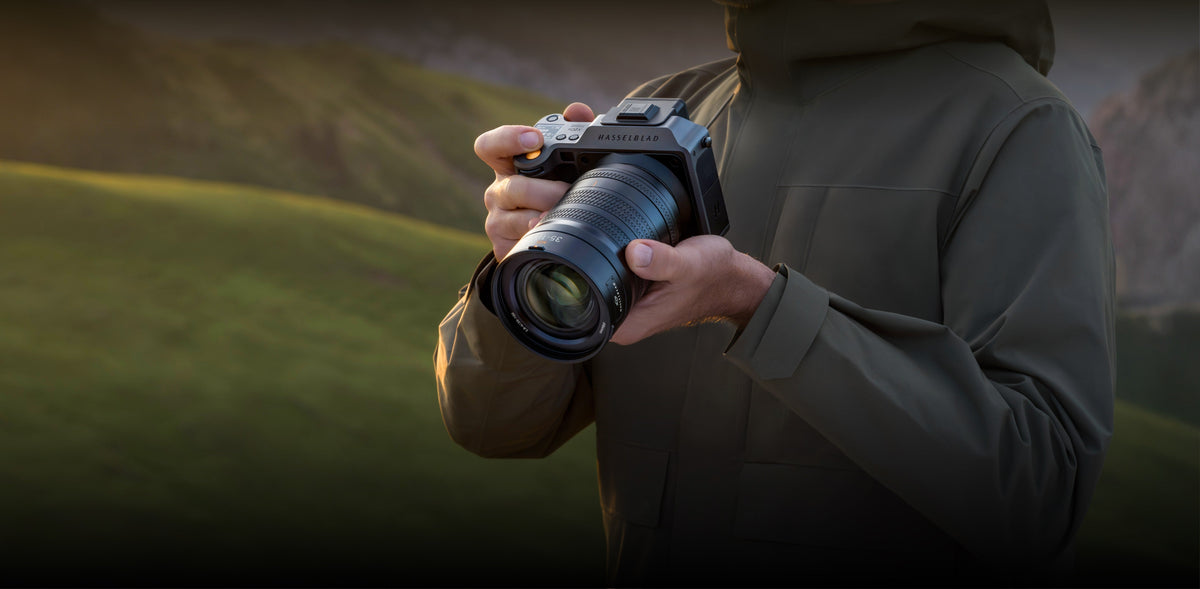
Hasselblad X2D II 100C combines a 100 MP medium-format BSI CMOS sensor measuring 43.8 × 32.9 mm with 16-bit colour depth, native ISO 50 sensitivity, and a dynamic range of up to 15.3 stops. The Hasselblad Natural Colour Solution (HNCS) with HDR is designed to deliver natural, nuanced reproduction of colours and tonal values. According to the manufacturer, the 5-axis image stabilisation compensates for up to 10 stops. Continuous autofocus with PDAF and LiDAR supports precise focus tracking.
The integrated 1 TB SSD offers generous internal storage. An additional CFexpress Type B slot is available for expansion. This ensures that the camera remains focused on a direct capture workflow, even during extensive high-resolution continuous shooting.
[cta: https://store-eu.hasselblad.com/de/products/x2d-ii-100c]
Hasselblad 907X & CFV 100C offers a modular route into high-resolution medium format photography. Its 100 MP BSI CMOS sensor also measures 43.8 × 32.9 mm and delivers 16-bit colour depth with a dynamic range of up to 15 stops. The system combines digital image quality with a deliberately pared-back, classic way of working.
The CFV 100C digital back can be used with the 907X body and is compatible with virtually all cameras and lenses of the V System from 1957 onwards. The original SWC is excluded. H, V, and XPan lenses require their respective dedicated adapters. This compatibility makes it possible to combine different photographic traditions in a contemporary 100 MP file.
[cta: https://store-eu.hasselblad.com/de/products/907x-cfv-100c]
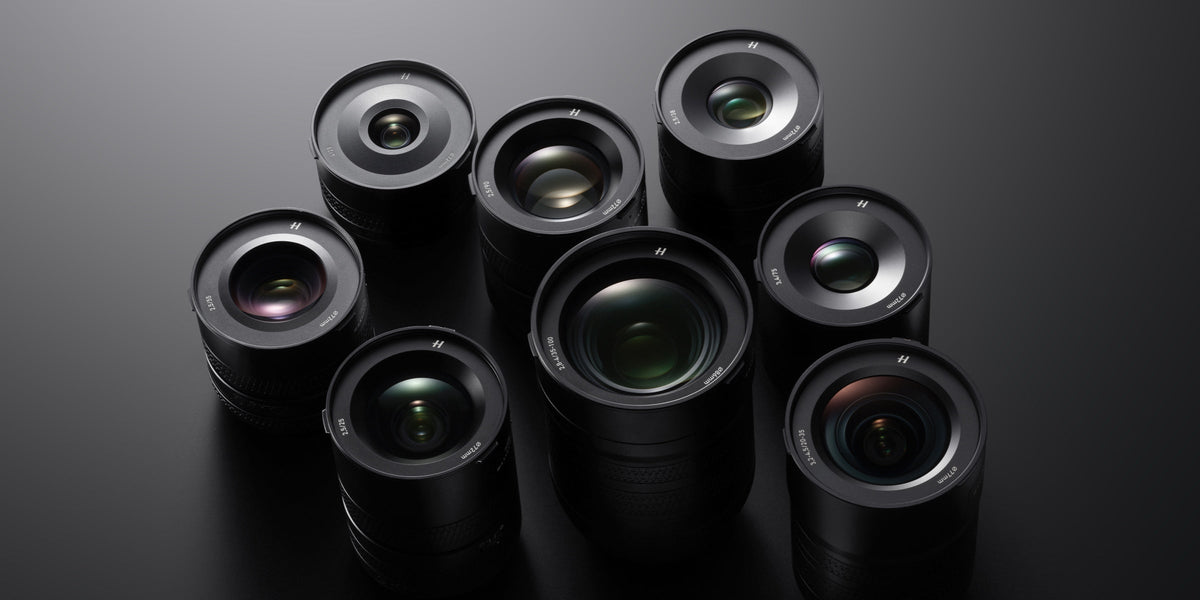
Hasselblad XCD 2.8-4/35-100E covers a full-frame equivalent focal length range of 28 to 76 mm. Its roughly 3x optical zoom spans from wide-angle, through standard focal length, to short telephoto, making it well suited to landscape, travel, street, and portrait photography.
Its optical design comprises 16 elements in 13 groups, including three aspherical and five ED elements. The integrated leaf shutter supports exposure times from 1/4000 second to 68 minutes, and enables flash synchronisation across the entire range of shutter speeds.
[cta: https://store-eu.hasselblad.com/de/products/xcd-2-8-4-35-100e]
How Do You Work with a 100 MP Camera?
You will get the most reliable results from a 100 MP camera when focus, shutter speed, exposure, and file management are all tailored to its high resolution. An elaborate or rigid process is not fundamentally necessary for this.
During Shooting: Focus, Stability, and Exposure
During shooting, precise focus, an appropriate shutter speed, and deliberate exposure are especially important.
The higher the resolution, the more precisely you can later see exactly where the focus lies. The focus point should therefore follow the main creative emphasis. In a portrait, this can be the subject's gaze. In a landscape, you can control the desired depth of field using aperture, distance, and focus position.
Not every image has to be uniformly sharp throughout its entire depth. A carefully placed point of focus can appear just as precise when combined with smooth, calm areas of blur.
A tripod is helpful for architecture, still life, long exposures, and carefully composed landscape shots. However, it is not a requirement for every 100 MP shot. Effective image stabilisation, a sufficiently short shutter speed, and steady handling also allow you to capture richly detailed results handheld.
Exposure remains a key part of image composition, regardless of resolution. Soft transitions in brightness, directional shadows, and controlled highlights define how three-dimensional and tangible a subject appears.
In the Workflow: RAW Files, Storage, and Export
In your workflow, 100 MP files primarily require ample storage space, reliable backups, and a clear selection structure.
The high-resolution original files do not need to be fully loaded or exported at full size at every stage of the workflow. Preview files can be used for reviewing and selecting images. Smaller export files are ideal for digital use, while the original files are kept for later editing and printing.
A clear, well-organised folder structure makes working on large projects much easier. Original files, editing stages, and final outputs should be kept separate from one another. At least one additional backup protects your footage from technical loss.
High resolution does not have to result in an unmanageable amount of data. A deliberate selection reduces the effort and draws attention to those images that convey an observation or idea most clearly.
Who Is a 100 MP Camera Suitable For?
A 100 MP camera is ideal for photographers who value fine detail, flexible cropping options, and image files that remain useful for years to come. A professional occupation is not a prerequisite for this.
The high resolution is particularly useful when you:
- want to capture richly textured subjects with great care,
- explore different crops and compositions after shooting,
- print images in large formats or use them in a photo book,
- edit colours and tonal values with fine control,
- archive personal projects for the long term,
- do not yet want to define all future ways you might use your images.
The benefits may not be fully visible in every single output. A small digital export does not display 100 million pixels. The high native resolution can already be valuable during editing, cropping, and preparing different formats.
At the same time, a large file demands more storage and processing power. These requirements can be managed well with a structured workflow. They should be seen as part of the overall system, not as a limitation on your photographic vision.
The decision in favour of 100 MP is therefore less a matter of profession. It depends much more on how highly you value detail, editing flexibility, and the long-term quality of your images.
Conclusion: 100 MP as Creative Latitude
100 MP is not a prerequisite for expressive photography. They do, however, provide a generous buffer in your images for fine details, new crops, and future outputs.
Its value becomes especially clear with large prints, intricate subjects, and precise post-processing. The same latitude can also be valuable for travel, portrait, and personal projects. An image does not need to serve a commercial purpose to be preserved with great care.
In the Hasselblad medium-format system, resolution never stands on its own. Sensor, colour reproduction, lens, and stability form a perfectly balanced whole. Technology does not replace photographic decision-making. It gives them more room to breathe.
Frequently Asked Questions about 100 MP Cameras
Is 100 MP useful for social media?
100 MP is not fully displayed on social media platforms. The high native resolution is still useful, as it allows flexible cropping, different aspect ratios, and precise editing before exporting the image for each platform.
How large can I print 100 MP images?
A file with 11,656 × 8,742 pixels will produce a print size of approximately 98.7 × 74.0 cm at 300 ppi. With a greater viewing distance, larger print sizes are also possible. Printing process, paper, and image sharpness all affect the result.
How large are RAW files from a 100 MP camera?
The size of a 100 MP RAW file depends on colour depth, compression, subject, and camera model. It can vary significantly between individual shots. For extended projects, you should plan for ample storage and reliable data backup.
What kind of computer performance makes sense for working with 100 MP RAW files?
For 100 MP RAW files, a modern multi-core processor, sufficient RAM, and a fast SSD are beneficial. A powerful graphics unit can speed up local adjustments. A well-balanced system that processes large files without unnecessary delays is crucial.
Can I actually see the difference of 100 MP on a regular monitor?
A standard monitor usually displays a 100 MP image scaled down. Differences still become apparent when you zoom in, crop, and edit fine details. The full level of detail really comes into its own on high-resolution displays and in large prints.