Landscape photography combines observation with precision. Light, viewpoint, and focal length determine how a place appears in the image; camera and lens determine how completely colour, tonal values, and fine structures are preserved.
For demanding landscape shots, dynamic range, colour depth, resolution, and choosing the right lens are particularly important. Their value is evident especially in high-contrast light, extensive editing, and large prints.
Image Composition in Landscape Photography
The viewpoint determines the perspective. A close foreground increases the sense of distance to the horizon, a higher position separates the layers of the landscape more clearly, and a greater shooting distance draws distant elements closer together in the frame.
A strong landscape shot therefore needs clear order rather than as much subject matter as possible. Foreground, middle ground, and background can create spatial depth; reducing the image to a few areas, lines, or colours can be just as effective.
The focal length changes the framing of the image, not the perspective itself. The perspective is determined by the position of the camera. This distinction is particularly important when choosing between wide-angle and longer focal lengths.
The Right Camera for Landscape Photography
Dynamic Range and Tonal Values
A wide dynamic range is particularly important in landscapes with strong differences in brightness: backlight, bright clouds over a shadowy valley, snow next to dark rock, or reflections on water.
The more of this brightness range is preserved in a single RAW file, the greater your freedom in editing. Bright areas retain structure, while colour and detail can still be differentiated in darker areas.
This also reduces the need for exposure bracketing. With moving water, vegetation, or fast-moving clouds, a single well-exposed shot can have advantages, because there are no differences in movement between several frames to reconcile.
X2D II 100C offers a dynamic range of up to 15.3 stops at native ISO 50. This provides a large tonal reserve within a single shot, especially in high-contrast landscapes.
Colour Depth and Natural Colour Reproduction
Landscapes often contain many closely related hues. Vegetation is made up of different shades of green, snow reflects both warm and cool light, and a clear sky shifts its colour continuously from the horizon to the zenith.
For these kinds of scenes, clean separation of similar colours is more important than strong saturation.
A RAW file with 16-bit colour depth offers finer intermediate values for colour and tonal adjustments. This is particularly important for smooth sky gradients, mist, water, and areas with subtle colour differences. Even more pronounced adjustments to shadows or local colour values can be made with greater latitude.
Resolution for Cropping and Large Prints
High resolution offers three clear benefits in landscape photography.
First, more detail remains after a heavier crop. This helps when terrain, paths, or viewpoints stop you from freely choosing the ideal position.
Second, perspective and geometry corrections cost image area. A high-resolution source file gives you more headroom when architecture, horizons, or other clear lines are corrected afterwards.
Third, large prints benefit from finely separated structures. Foliage, rock edges, ice, snow, or distant rows of trees remain more clearly differentiated, even in larger output formats.
On a small display, the extra resolution makes far less of a difference. Its benefit grows with print size, cropping, and the extent of editing.

@Albrecht Voss
Lenses for Landscape Photography and How They Shape the Image
Wide-Angle for Closeness and Depth
A wide angle of view is particularly well suited to compositions that connect a nearby element with a great distance.
Rocks, shorelines, plants, or architectural elements in the foreground can draw the eye into the depth of the scene. Meanwhile, distant mountains or other background elements appear smaller in the image.
Wide-angle is therefore not automatically the right choice for big landscapes. Without a meaningful foreground or a clear spatial structure, a very wide frame can actually make the main subjects look smaller.
XCD 3,2-4,5/20-35E covers approximately 16–27 mm in full-frame equivalent terms. Its zoom range lets you adjust the wide framing precisely on location.
Medium Focal Lengths for Clear Compositions
Medium focal lengths suit landscapes whose impact comes from shapes, colours, and rhythm rather than from a strongly emphasised perspective.
Forests, hilly landscapes, urban spaces, or minimalist subjects can be framed more selectively. Busy areas can be excluded from the frame without the spatial relationships looking heavily exaggerated.
These focal lengths are particularly suitable for compositions where individual elements within the landscape need to be clearly separated from one another.
Longer Focal Lengths for Distant Layers
Longer focal lengths concentrate the view on smaller sections.
They are particularly useful when light touches only a distant mountain slope, layers of mist stack up, or isolated groups of trees and geological formations are to be picked out from a vast landscape.
The characteristic compression is created by the greater shooting distance. As a result, distant layers appear closer to one another in the two-dimensional image.
XCD 2,8-4/35-100E covers approximately 28–76 mm in full-frame equivalent terms. This lets you switch between a wider composition and a tighter landscape crop from the same position.
Light in Landscape Photography
Side Light Reveals Form and Surface
Side light or low-angle light reveals relief.
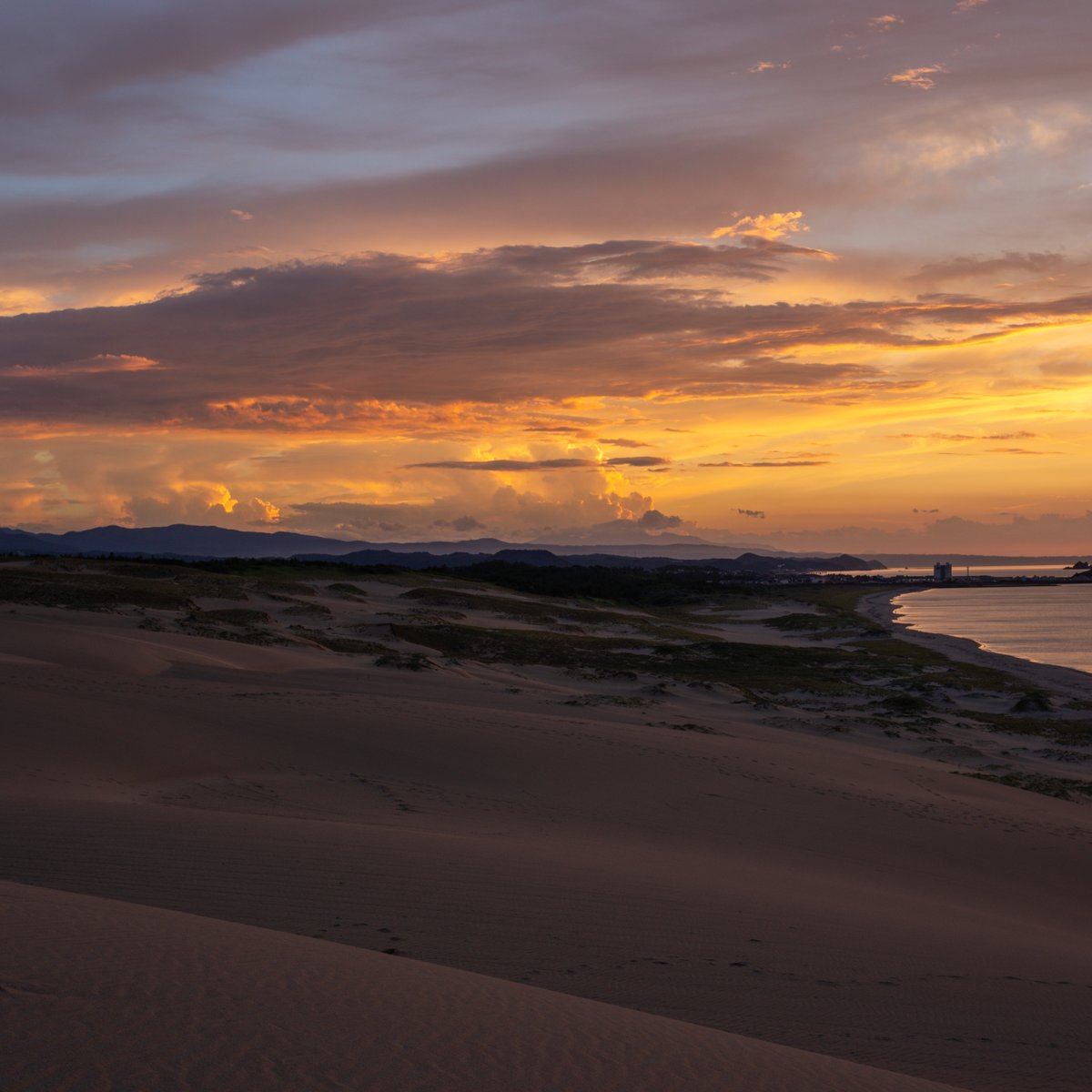
Mountainsides, dunes, snow, and rock gain texture from small shadows. Unevenness is more clearly defined, and the direction of the light can guide the eye through the image.
Backlight can also bring out haze, mist, or translucent vegetation. Meanwhile, the brightness difference between light and dark areas often increases, which places greater demands on the camera's dynamic range.
Diffuse Light Reveals Colour and Material
Cloud cover reduces harsh shadows and creates more even lighting.
This works particularly well for forests, waterfalls, wet rock, moss, and vegetation. Colour and surface texture stand out more because direct light edges are less dominant.
With increasing distance, mist reduces contrast and colour saturation. This creates clearly separated layers in the landscape, without needing an extreme angle of view.
Hard Light Creates Clear Structures
Direct midday sun can reduce landscapes to geometric shapes and stark contrasts.
Deserts, rock formations, architecture, shadow lines, or minimalist scenes often benefit from this clarity. Colour can appear more intense, while hard shadows clearly separate individual shapes from one another.
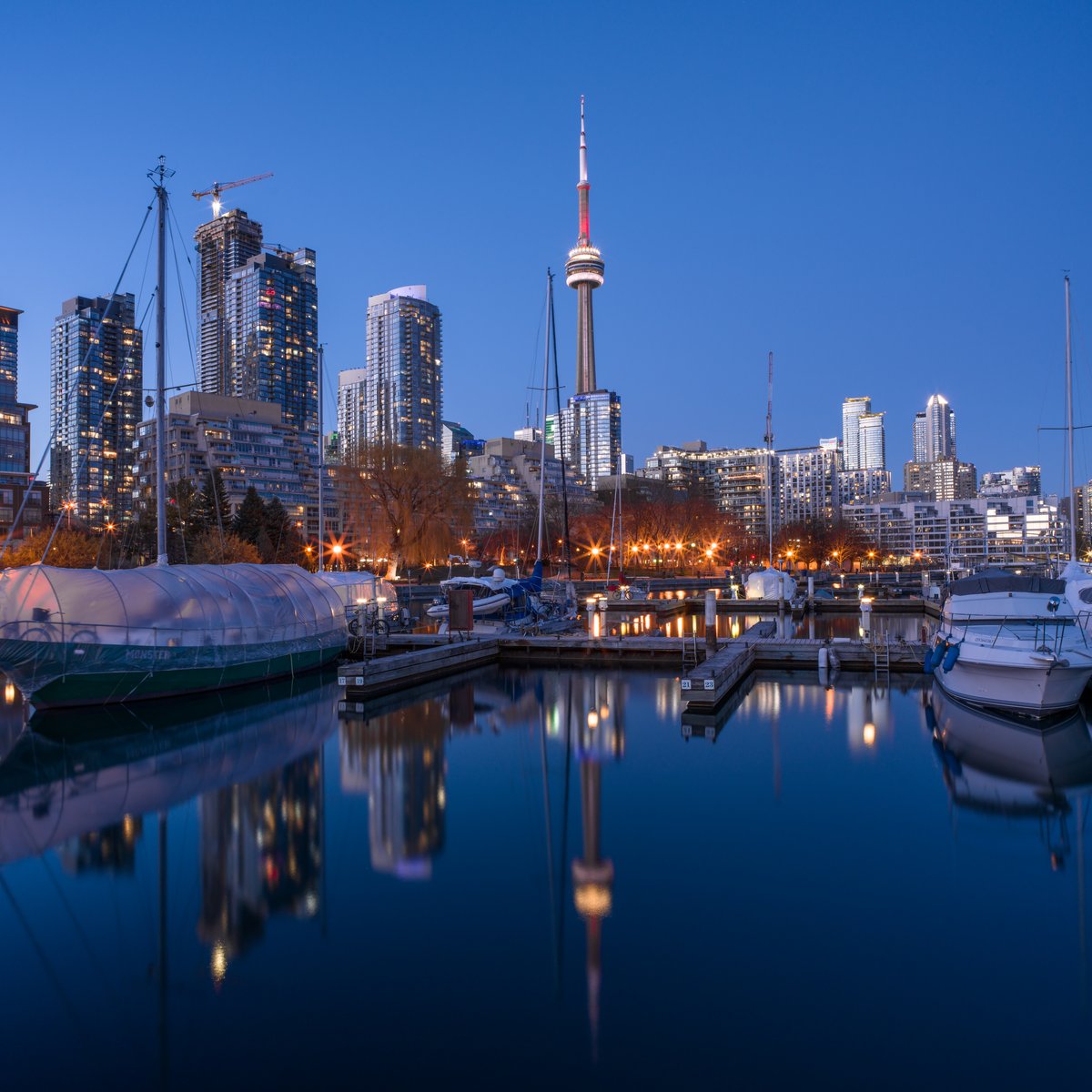
The quality of light therefore cannot be defined by a preferred time of day. Different lighting conditions reveal different characteristics of the same landscape. Just how quickly those conditions can shift becomes especially clear during the blue hour, when the remaining light fades within just a few minutes.

@Jiaze Wang
Sharpness and Exposure in Landscape Photography
Placing Focus Deliberately
For many landscape subjects, apertures of around f/8 to f/11 are a good starting point for balancing the depth of field and detail resolution. The optimal setting depends on the focal length, focusing distance, and desired output.
Very small apertures increase the depth of field, but diffraction increasingly reduces the finest detail.
A single focal plane is often sufficient when there is no important subject directly in front of the camera. If, however, very close structures and a distant background both fall within the relevant zone of sharpness, focus bracketing can be useful.
Moving leaves, grass, or water make it harder to merge multiple focus planes afterwards. Focus bracketing therefore makes most sense for static subjects and when front-to-back sharpness is essential.
Exposure in High-Contrast Scenes
A single RAW shot is the simplest solution, as long as the relevant highlights and shadows fall within the camera's dynamic range.
The histogram shows whether important bright areas are already blowing out without detail. If the highlights are preserved, you can selectively lift the shadows during RAW processing.
If the scene contrast exceeds the reserves of a single shot, exposure bracketing extends the range of brightness that can be captured. Still landscapes are particularly suitable for this.
With waves, wind, or fast-moving clouds, working cleanly from a single shot is often easier. In such situations, a wide dynamic range reduces the reliance on multiple exposures.
Filters and Tripods in Landscape Photography
A polarising filter changes reflections at the moment of capture. On water, wet rock, and vegetation, it can cut down reflections and reveal the colour and texture underneath. With very wide angles of view, the effect can be uneven across the sky.
A neutral density (ND) filter lengthens the exposure time. This lets you make the movement of water or clouds visible. It does not, however, change the dynamic range of the scene.
A tripod offers advantages for long exposures, exposure bracketing, and focus bracketing. In these situations, it keeps the camera position steady between multiple shots.
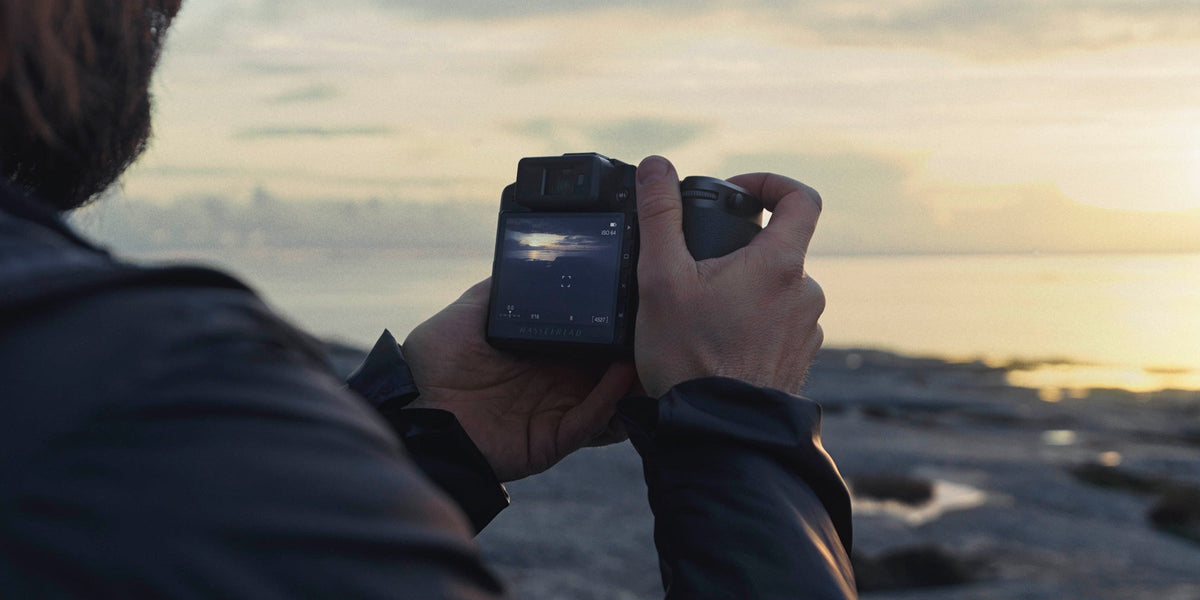
For single shots, effective image stabilisation widens the range of situations you can shoot handheld. This is particularly helpful in changing light or in locations where the camera position changes frequently.
Landscape Photography with X2D II 100C

@Albrecht Voss
X2D II 100C combines a 100-megapixel medium-format sensor with a dynamic range of up to 15.3 stops, 16-bit colour depth, and 5-axis image stabilisation of up to 10 stops.
These features directly address typical demands of landscape photography.
Preserving Tonal Values and Colour in a Single Shot
The dynamic range supports scenes with a bright sky and a dark foreground at the same time. A single RAW file can therefore contain more tonal information, and in suitable situations reduces the need for bracketing.
16-bit colour depth provides extra tonal gradations for landscapes with subtle colour transitions. Skies, mist, vegetation, and natural materials in particular benefit from this reserve during editing.
Detail for Cropping and Large-Format Output
100 megapixels provide generous cropping latitude and give you extra image area for perspective corrections.
With large prints, more detail is also retained in fine landscape structures. This is especially true for scenes with dense foliage, rock, snow, ice, or many distant elements.
The resolution gives you flexibility between shooting and final output, without forcing you to lock the composition into a single format on location.
Staying Mobile in the Field
The 5-axis image stabilisation of X2D II 100C is rated at up to 10 stops. It extends the range in which landscapes can be captured handheld in lower light.
This is especially important when the light changes quickly, or when you want to try out several viewpoints in a short time. A tripod is still useful for multi-shot techniques, but it is not a basic requirement for a high-resolution landscape shot.
XCD 20-35E complements the camera for wide compositions with foreground and spatial depth. XCD 35-100E covers a wider range from moderate wide-angle to short telephoto and is particularly suited to changing framing and distant layers of the landscape.
[cta: https://store-eu.hasselblad.com/products/x2d-ii-100c]
Frequently Asked Questions about Landscape Photography
Which camera is suitable for landscape photography?
A camera with a wide dynamic range, flexible RAW files, and sufficient resolution is particularly well suited to landscape photography. Image stabilisation further expands what is possible when shooting handheld. The required resolution mainly depends on print size and cropping.
How many megapixels do I need for landscape photography?
There is no fixed minimum resolution. Extra megapixels are especially valuable for large prints, heavy cropping, and perspective corrections. For smaller digital output, significantly lower resolution is sufficient.
What focal length is suitable for landscape photography?
Wide-angle emphasises close foregrounds and spatial depth. Medium focal lengths create more balanced proportions and make clean framing easier. Longer focal lengths suit distant details and the visual layering of landscape planes.
Is a tripod always necessary for landscape photography?
No. Image stabilisation makes it possible to shoot many landscape photos handheld. A tripod is particularly useful for long exposure times, exposure bracketing, and focus bracketing, because the camera position needs to remain constant across multiple shots.
Is medium format a good choice for landscape photography?
Yes. Medium format offers extra latitude, especially for large prints, extensive cropping, subtle colour gradations, and high-contrast scenes. High resolution, large tonal reserves, and 16-bit colour support both editing and high-quality output.