Medium-format image quality often reveals itself in the more understated parts of a photograph: in the transitions from light to shadow, in the texture of materials, or in colours that remain natural even under challenging lighting conditions. These qualities become particularly apparent when an image is printed large, cropped with precision, or edited with care.
The larger sensor area provides more room for this. Resolution, lens performance, dynamic range, and colour depth preserve the information that shapes the visual impression. What really matters is how seamlessly these elements work together in the final image.
|
Factor |
Impact on the image |
|
Sensor area |
Creates latitude for detail, tonal values, and colour |
|
Resolution |
Enables large prints and precise crops |
|
Lens performance |
Transfers textures and contrast to the sensor |
|
Dynamic range |
Preserves information in shadows and highlights |
|
Gradation of tones |
Preserves subtle transitions between light and dark |
|
Colour depth |
Provides extensive colour and brightness information |
|
Colour processing |
Ensures natural, consistent results |
Why Sensor Size Shapes Image Quality
A digital Hasselblad medium-format sensor measures 43.8 × 32.9 mm. Compared with a full-frame sensor measuring 36 × 24 mm, this works out to roughly 1.67 times the area, or about 67 per cent more sensor surface.
This extra space provides a solid foundation for high resolution, nuanced colours, and delicate gradations in brightness. The visual impact goes far beyond crisply defined edges.
In a landscape, distant layers can remain clearly separated without losing their sense of atmospheric depth. On a face, the light transitions smoothly from the illuminated skin into the shadows. With wood, fabric, glass, or metal, you see not only the shape, but also the character of the surface.
The sensor's surface provides the extra image capacity. Lens, focus, light, and processing ultimately determine how fully they are preserved.

@Mark McGee
Resolution in Medium Format: When 100 MP Really Make a Difference
A high megapixel count first describes how many pixels an image contains. It becomes photographically significant through the freedom it offers in editing and output.
100 MP gives you particularly wide latitude for:
-
large-format prints and exhibitions;
-
precise framing of the image;
-
extensive commercial retouching;
-
varying aspect ratios and media formats;
-
later outputs whose requirements were not yet defined at the time of shooting.
With a large print, the image remains visually cohesive as a composition when viewed from a distance. Up close, fine textures and subtle colour variations emerge. In commercial production, a single shot can be cropped for multiple formats without the remaining image area quickly losing depth or impact.
High resolution also reveals the smallest decisions. A precisely set focus and a steady camera are essential to ensure that the available detail is not lost during capture.
X2D II 100C: High Resolution in Motion
The fine details in a 100 MP image demand precision. However, you do not have to confine the photographer to working in a fixed position.
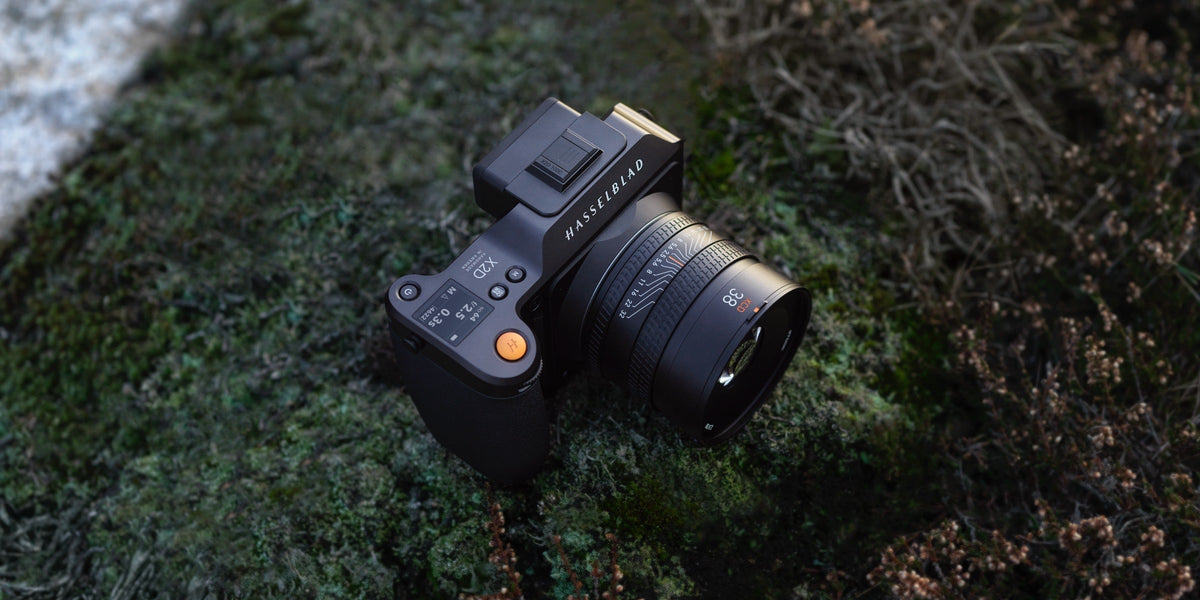
X2D II 100C pairs its 100 MP medium-format sensor with 5-axis image stabilisation, offering up to 10 stops at the centre of the frame and 8 stops towards the edges. This allows you to use longer handheld shutter speeds while preserving natural lighting moods and fine details.
For landscape, architecture, portrait, or travel work, this means greater freedom to respond to the available light and capture the moment as it truly appears.
[cta: https://store-eu.hasselblad.com/de/products/x2d-ii-100c]
How Lenses Shape Detail Rendering
A high-resolution sensor can only reveal what the lens reproduces with precision. It is not just about achieving maximum sharpness in the centre of the image.
Fine detail also means capturing:
-
fine textures;
-
subtle contrast differences;
-
natural rendering of materials;
-
controlled colour transitions;
-
clarity right to the edges of the frame.
In a portrait, this may include individual hairs, skin texture, and fabric fibres. In an architectural shot, not only clean lines matter, but also the surfaces of stone, glass, and metal. A suitable lens preserves these nuances without making the image look unnecessarily harsh.
As sensor resolution increases, precise focusing, shooting stability, and optical correction also become more important. Image imperfections that are barely noticeable in smaller outputs can become clearly visible in a large print or a heavy crop.
XCD 2,8-4/35-100E: Precision across the Image Field
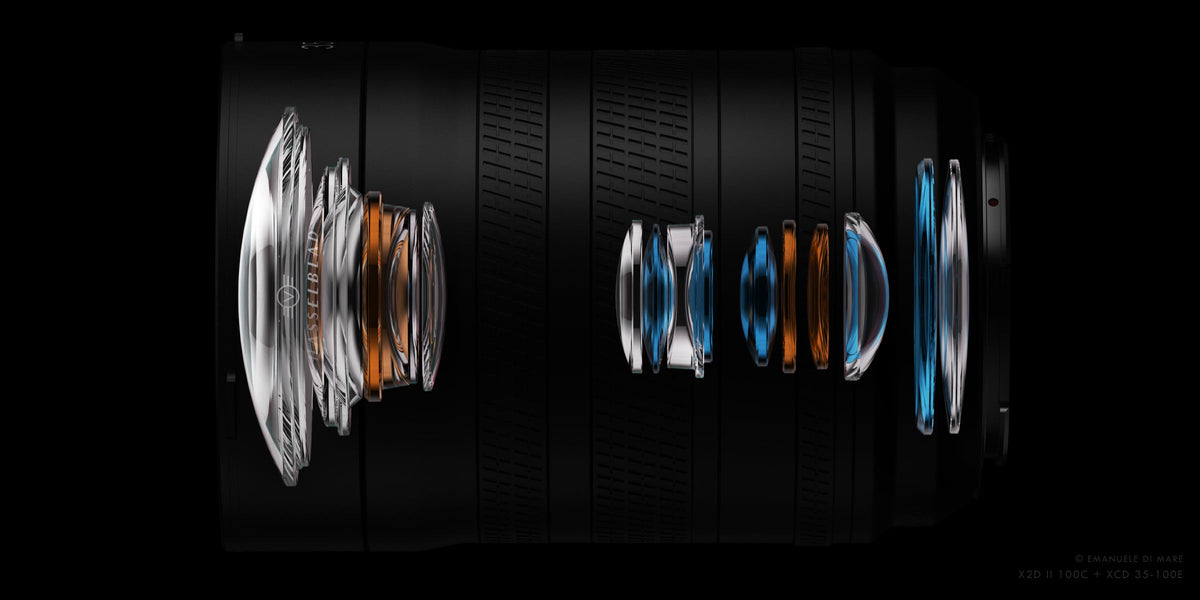
XCD 2,8-4/35-100E is designed to meet the demands of a 100 MP sensor. Three aspherical and five ED elements help control optical aberrations and provide the technical foundation for clear rendering across the entire image field.
Its focal length range from 35 to 100 mm covers everything from wide angle to medium telephoto. This allows the same visual language to be maintained in a wide landscape, a cleanly structured architectural shot, and a tightly focused portrait.
The technical specifications are all in service of a visible result: Structures, colours, and contrast remain finely differentiated even where a subject extends all the way to the edges of the frame.
[cta: https://store-eu.hasselblad.com/de/products/xcd-2-8-4-35-100e]
Dynamic Range, Tonal Values, and Colour Depth
Dynamic range, tonal gradation, and colour depth describe different aspects of the same image information.
|
Concept |
Meaning |
|
Dynamic range |
The range that can be captured between deep shadows and bright highlights |
|
Gradation of tones |
The subtlety of the transitions within this range |
|
Colour depth |
The number of available colour and brightness levels |
Dynamic Range
When bright window light meets a darker interior, image quality is determined by what is preserved between these extremes. The same applies to backlit portraits, bright clouds over a dark landscape, or reflective surfaces in a product shot.
X2D II 100C offers a dynamic range of up to 15.3 stops. This preserves extensive information from deep shadows to bright highlights, making it available for further post-processing.
Gradation of Tones
A wide dynamic range describes the breadth of the captured brightness spectrum. Tonal gradation determines how smooth the transitions appear within this range.
It becomes visible on skin where light gradually fades into shadow. In a landscape, the atmospheric layers remain distinct from one another. Dark fabrics and matte materials retain their texture rather than turning into featureless blocks.
These nuances give an image depth, without the need to artificially boost contrast.
Colour Depth
The 16-bit colour depth of X2D II 100C provides around 281 trillion possible colour values for capture and processing. This wealth of data supports smooth gradations and precise adjustments, especially for skin tones, skies, and subjects with subtle colour differences.
The benefit does not lie in making colours appear strikingly stronger. It lies in the ability to differentiate a colour more precisely, and to preserve its natural context even after extensive editing.

@Thomas
How HNCS Renders Colours and Tones
Natural colour reproduction does not mean making every colour appear more intense. What really matters are the relationships between colours: between skin and clothing, daylight and artificial light, or warm materials and a cooler environment.
The Hasselblad Natural Colour Solution (HNCS) combines the camera's individual calibration with colour processing that is geared towards consistent colours, natural skin tones, and smooth transitions. Tonality and contrast are factored into the processing, so different subjects no longer require their own individual colour profile.
With X2D II 100C, HNCS HDR develops this principle into an end-to-end HDR workflow. The captured image data can be viewed in the camera, and then edited in Phocus or Phocus Mobile. The expanded P3 colour space supports a more nuanced rendering of colour and brightness.
The visual effect always serves the subject: more detail in bright light, clear colours in demanding conditions, and transitions that retain their natural calm.
Medium Format vs. Full Frame: When Does the Difference Become Noticeable?
The difference between medium format and full frame becomes particularly apparent when resolution, tonal values, and colour information are all carried through to the final output.
Large Prints and Exhibitions
As print size increases, it becomes clear how finely details and tonal transitions have been captured. A medium-format image can appear as a complete composition from a distance, and reveal additional layers of texture and colour on closer inspection.
Precise Cropping
The high resolution gives photographers more freedom to rework the balance of a composition after the shot has been taken. This is particularly helpful when a subject is used across multiple aspect ratios, publications, or advertising formats.
Complex Lighting Conditions
In scenes with wide differences in brightness, more image information is available for post-processing. Bright fabrics, windows, skies, or reflections can retain their detail, while darker areas remain nuanced.
Portraits and Fashion
Skin, hair, and fabrics benefit from refined detail and colour reproduction. The sense of spatial depth arises from the interplay of sensor size, focal length, aperture, shooting distance, and light.
Landscape, Travel, and Architecture
Medium format is not limited to carefully controlled studio settings. Modern stabilisation, autofocus, and the choice of a suitable XCD lens make it ideal for landscape, architecture, street, and travel photography. X2D II 100C supports, among other things, AF-C, subject detection, and powerful image stabilisation.
Product Photography and Fine Art
When material, texture, and colour need to be rendered with absolute precision, medium format provides extensive latitude for retouching and output. This applies to commercial productions as well as to fine art projects, where the finished print is an essential part of the work.
In smaller digital displays, the difference may appear more subtle. The additional information remains available for cropping, editing, and future output formats.

@Xu-Ning
How to Make the Most of Medium-Format Image Quality
The high resolution of medium format makes your photographic choices visible. A carefully chosen focus, an aperture selected for its visual impact, and a steady shot preserve the subtle nuances that this format is designed to capture.
The lens should match the desired perspective and the intended output format. A sweeping landscape places different demands on the edges of the frame than a portrait with concentrated sharpness. The shutter speed should also not be chosen solely according to a general rule of thumb, but based on focal length, movement, and the desired level of detail rendition.
RAW files retain the widest range of colour and tonal information. A calibrated monitor, consistent colour spaces, and an appropriate output profile help preserve this information from capture through to the final image.
High-resolution files also require a workflow that is appropriately prepared for them. Fast storage, ample processing power, and reliable data backup make extensive image information efficiently usable.
Anyone who already knows at the time of capture whether an image will appear as a fine art print, in a publication, or in several digital formats can make more targeted use of the potential of medium format.
Further Options in the Hasselblad System
907X & CFV 100C brings 100 MP image quality into a modular camera system. The CFV-100C digital back can be paired with the 907X body, as well as with compatible V System and technical cameras. When used with traditional V System or technical cameras, focusing is carried out manually.
In this way, the system combines the precision of modern digital capture with a way of working rooted in Hasselblad's modular camera tradition.
[cta: https://store-eu.hasselblad.com/de/products/907x-cfv-100c]
Conclusion: When Medium-Format Image Quality Makes the Difference
Medium-format image quality starts with a larger sensor area, but only truly comes into its own in the finished photograph.
Their strengths become apparent wherever fine structures need to remain an integral part of light, colour, and space: in a large-format print, a precise crop, or a carefully refined file. Sensor, XCD lens, and colour processing work together as a single, integrated system.
The result is not a single showy effect. It is an image quality that reveals more the closer you look: in a tonal value, a texture, or a detail that preserves its natural impact all the way through to the final output.
Frequently Asked Questions about Medium-Format Image Quality
What resolution does a medium-format camera have?
Digital medium-format cameras do not have a standard resolution. Current models often offer 50 or 100 MP. How many details can be used in the final image also depends on the lens, focus, shooting stability, and processing.
Is 100 MP useful for every shot?
100 MP is particularly valuable for large prints, heavy cropping, and elaborate retouching. For smaller digital outputs, full resolution is not always necessary, but it does offer extra flexibility for future image formats.
Can I actually see medium-format image quality on a monitor?
On a high-quality, calibrated monitor, you can see differences in details, colours, and tonal values. The potential becomes most apparent with enlarged views, precise crops, and large prints.
Does a medium-format camera always have to be used on a tripod?
No. Modern image stabilisation also makes it possible to shoot high-resolution images handheld. A tripod is still useful when you need long exposure times, consistent framing, or maximum precision with static subjects.
What does image dimensionality mean in medium format?
Image plasticity describes the spatial impression of a photograph. It arises from perspective, focal length, shooting distance, depth of field, light, and tonal reproduction. The sensor size alone does not create this impression.