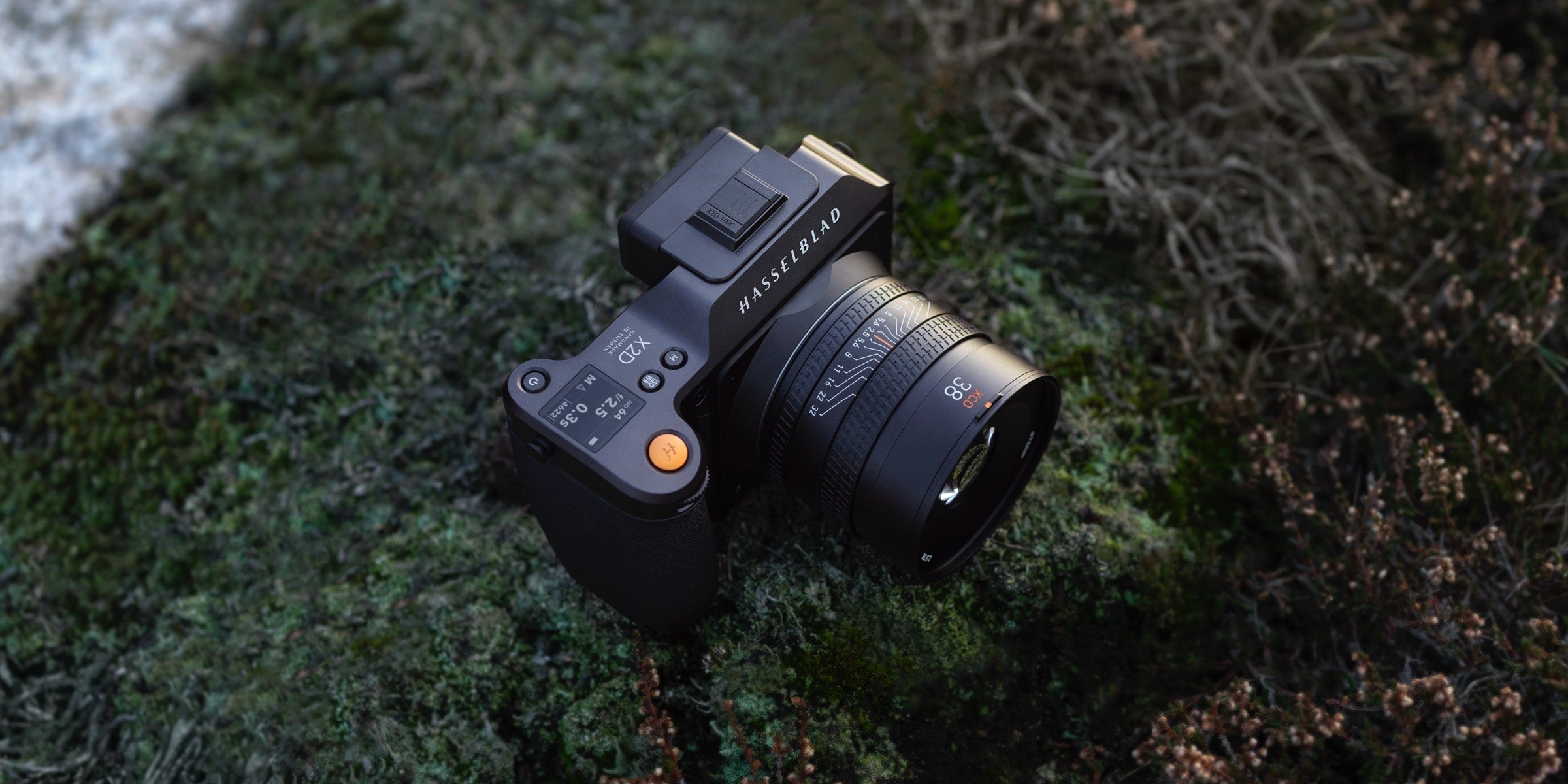
The fundamental difference between medium format and full frame lies in sensor size. A Hasselblad sensor with 43.8 × 32.9 mm offers roughly 67 per cent more area than a full-frame sensor with 36 × 24 mm. This allows the imaging system to capture finer details, render transitions between light and shadow with greater nuance, and provide additional latitude for cropping, editing, and high-quality output.
How clearly these differences become visible depends on the shot and how it will be used later. On a small display, both formats can look very similar. With large prints, pronounced crops, or extensive post-processing, the medium format’s additional detail, colour, and tonal reserves become much more apparent.
Medium Format and Full Frame at a Glance
Medium format offers a larger physical area for capturing images. Its strengths are particularly evident in finely graduated tonal values, precise colour reproduction, and high-resolution files that remain robust even after extensive editing.
Full frame is available in a very wide range of camera bodies, lenses, and price points. Depending on the system, the focus may be on compact design, high continuous shooting speeds, video, or particularly long focal lengths.
|
Feature |
Medium format |
Full frame |
|
Typical sensor size |
43.8 × 32.9 mm on the Hasselblad X System |
36 × 24 mm |
|
Sensor area |
Around 67 per cent larger |
Smaller |
|
Detail latitude |
Particularly strong when cropping, retouching, and producing large-format prints |
High and suitable for a wide range of applications |
|
Tonal values and colour |
Plenty of scope for fine gradations and colour separation |
Dependent on camera and sensor generation |
|
Depth of field |
Lower depth of field possible with comparable image composition |
Similar effects achievable with fast lenses |
|
Camera performance |
Depending on body, lens, and software |
Depending on body, lens, and software |
|
File size |
Larger files with extensive editing headroom |
Usually smaller, more compact files |
|
System selection |
Specialised premium systems |
Very wide choice of bodies and lenses |
These characteristics highlight typical differences. The real-world performance of a camera is always determined by the complete system.
Sensor Size and Image Quality
Sensor Area and Resolution
The megapixel count indicates how many pixels a sensor records. The sensor size indicates the physical area over which these pixels are distributed. Both values affect image quality, but they are not the same.
A larger sensor provides a different foundation for high-resolution shots. This becomes particularly important when the file is pushed to its limits, whether through retouching, different crops, large-format printing, or the precise reproduction of complex materials.
In a portrait, hair, skin, and fabrics can remain clearly separated from one another. In architectural photography, you can capture façades, surfaces, and fine structural details consistently across the entire frame. In landscape images, distant structures remain visible without overpowering the overall impact of the scene.
The additional reserves give photographers more freedom in post-production. An image can be cropped to different aspect ratios and outputs while preserving the essential details.
How noticeable the practical difference to full-frame is also depends on where the image will be shown. For social media or small prints, a high-quality full-frame file can already meet all requirements. In exhibition prints, highly detailed campaign motifs, or extensive crops, the higher information density of medium format becomes much more apparent.

@Zhenglin Li
Tonal Values and Colour Reproduction
Many of the defining differences between images are not found in sharply outlined details, but in the transitions between them.
This can be the change in light across a face, the gradation between a bright sky and a darker landscape, or a subtle shift in colour on wood, glass, or metal. A larger sensor area can capture these transitions with a high level of subtlety.
Good colour reproduction does not mean making colours appear as vivid as possible. What matters is whether colours that lie close together in tone remain distinct, yet still work together naturally. This is particularly important for skin tones, fabrics, product surfaces, and mixed lighting.
Hasselblad combines the larger sensor area with finely tuned colour processing that is designed for natural colours and smooth, continuous tonal gradations. This allows exposure, contrast, and colour to be adjusted with precision, without subtle relationships between bright, mid-tone, and dark areas of the image being lost too early.
Full-frame systems can also deliver high resolution, a wide dynamic range, and nuanced colour reproduction. The difference is not a simple dividing line between good and less good image quality, but the additional latitude that a larger capture area offers for demanding outputs.
Depth of Field and Spatial Impact
The angle of view is determined by the interplay between focal length and sensor size. For a similar framing, medium format generally calls for a longer focal length than full frame.
On the Hasselblad X System, the angle of view roughly corresponds to a full-frame focal length, calculated using a factor of 0.79. An XCD lens with 55 mm therefore produces a similar angle of view to a lens of around 43 mm in full-frame terms.
With comparable composition, the same shooting distance, and the same aperture, medium format can produce a shallower depth of field. The subject can stand out clearly from the background, while the transition between sharpness and blur remains soft and gradual.
Perspective, on the other hand, is primarily determined by the position of the camera and its distance from the subject. It is not the sensor that directly changes it. However, changing the format may prompt photographers to choose a different focal length or shooting distance to achieve the desired composition.
The often discussed medium format look is therefore the result of several factors: sensor size, lens, light, shooting distance, depth of field, tonal reproduction, and composition. It cannot be reduced to background blur alone.
Camera System and Workflow
Sensor size is only one part of a camera. Autofocus, stabilisation, lenses, operation, and file processing determine how flexibly a system can be used in practice.
Autofocus and Stabilisation
Medium format is still often associated with large studio cameras and a predominantly manual way of working. Modern mirrorless systems have pushed these limits considerably.
Autofocus performance depends on the camera body generation, autofocus system, lens drive, and software. Current medium format cameras can focus continuously, track subjects, and remain responsive even when shooting hand‑held.
Image stabilisation expands what is possible in low light and with longer exposure times. It makes travel, portrait, and landscape photography without a tripod easier, and helps you take full advantage of the high sensor resolution even outside controlled conditions.
Certain sports and wildlife applications place special demands on burst rate, buffer, and extremely long focal lengths. Full-frame systems often offer a wider choice of specialised bodies and super-telephoto lenses in these areas. However, this does not mean that moving subjects are inherently tied to a specific sensor format.
Size and weight should also be considered as part of the overall system. A camera with a compact prime lens makes for a different travel setup than one with a fast zoom or telephoto lens. This applies to medium format as well as full frame.

@Zhenglin Li
Lenses and Lighting Design
A medium format lens has to illuminate a larger image circle. This requirement influences the optical design and image rendition right out to the edges of the sensor.
The lens plays a crucial role in determining how clearly details are rendered, how focus transitions into blur, and how colours and contrast appear across the entire image area. A comparison based solely on the camera bodies is therefore insufficient.
The XCD lenses are precisely matched to the sensor size and resolution of the Hasselblad X System. Their aim is to deliver a controlled rendering of fine details, natural colours, and smooth transitions, rather than a harshly exaggerated impression of sharpness.
Many XCD lenses also feature a built-in leaf shutter. This allows flash synchronisation across the shutter speed range supported by each lens. In outdoor portraits, this makes it possible to reduce bright ambient light, while shaping the subject deliberately with flash.
Depending on the lens, flash sync speeds of up to 1/4000 second are possible. This is not a universal feature of all medium-format cameras, but a specific characteristic of the respective Hasselblad lens system.
The native aspect ratios also differ. The Hasselblad X System uses 4:3, while a full-frame system typically works with 3:2. Both formats offer different starting points for composition and output.
File Size and Workflow
High-resolution RAW files require appropriate storage, backup, and processing capacity. This should be taken into account when planning a medium-format system, especially for high shooting volumes or extensive retouching.
The increased data volume also enables precise colour grading, pronounced cropping, and a range of output formats. For advertising, editorial work, exhibitions, or archiving, you retain a robust source file that still provides ample image information even after extensive editing.
System investment for medium format cameras and their corresponding lenses is usually higher than for many full-frame systems. Full-frame systems offer a wider range of price and performance categories. What really matters, therefore, is whether the additional image latitude offers a tangible benefit for your work and output.
Anyone who wants to combine photography and video in a single system should compare not only the sensor format, but also the video functions of the respective camera body. These differ significantly between individual camera models.
Photographic Applications Compared
The sensor format does not determine the photographic genre. Which camera is right for a shot depends on the subject, the intended output, and the chosen combination of body and lens.
Portrait, Fashion, and Advertising
In portrait and fashion photography, medium format can render skin, hair, fabrics, and subtle differences in materials with outstanding precision. With thoughtful composition, the subject is clearly separated from its surroundings, while the transition to the background remains smooth rather than abrupt.
For beauty, editorial, and commercial work, high-resolution files provide ample margin for retouching, colour grading, and alternative crops. The central shutter of selected XCD lenses also broadens the options for flash photography, both in the studio and on location.
Full frame is used successfully in the same fields and, depending on the camera, can also deliver highly detailed files. Medium format offers a larger sensor area and therefore additional latitude when the image is intended for large-scale prints or particularly intensive post-processing.
Landscape, Architecture, and Fine Art
Landscape and architectural photography benefit from fine detail, controlled highlights, and nuanced shadows. Rock surfaces, vegetation, façades, and atmospheric layers can remain clearly separated within a single image.
In fine art projects, this difference often becomes apparent in print. Even in large formats, fine details and tonal transitions remain clearly visible.
A tripod can be very useful for long exposures, focus stacks, or perfectly repeatable compositions. With modern medium format, however, it is not fundamentally required. Stabilisation and more compact lenses also enable spontaneous handheld shooting.
Travel, Reportage, and Moving Subjects
A compact medium format body paired with a lightweight prime lens can be a highly portable setup for travel, street photography, and personal documentary work. Zoom lenses add flexibility when subjects and shooting distances change frequently.
Continuous autofocus, subject detection, and stabilisation support a highly responsive way of working. This makes it possible to capture portraits in motion, street scenes, and changing situations without having to sacrifice the format’s outstanding image quality.
Full frame can be particularly suitable when a job consistently requires very high continuous shooting speeds, extensive video recording, or a wide range of very long telephoto lenses. For other travel and reportage projects, the additional colour, detail, and tonal reserves of medium format can play a more significant role.

@Hang Yu
Which Format Best Suits Your Way of Working?
Medium format really comes into its own when fine details, natural colours, and carefully controlled tonal transitions are at the heart of the image. It is ideal when images are heavily edited, printed in large formats, or prepared for multiple high-quality outputs.
Full frame can be a better fit for tasks that rely on especially high continuous shooting speeds, a wide range of super-telephoto lenses, extensive video capabilities, or compact file sizes. An existing setup of lenses and accessories can also be a decisive factor in your choice.
Many photographers work with both formats and choose their camera according to the project. The choice does not define a hierarchy, but rather different priorities for shooting, editing, and output.
Modern Medium Format in Practice
X2D II 100C demonstrates how the image potential of medium format can be combined with a mobile, modern camera system.
Its 43.8 × 32.9 mm BSI CMOS sensor captures images with 100 megapixels and 16-bit colour depth. The Hasselblad Natural Colour Solution (HNCS) with HDR delivers natural colour reproduction and preserves details in both highlights and shadows.
Continuous autofocus, subject detection, and 5-axis image stabilisation with up to ten stops of compensation broaden the creative possibilities for portraits, landscapes, travel, street photography, and moving subjects. The high resolution and colour depth provide ample latitude for editing and output, while stabilisation and autofocus make it easier to shoot handheld.
With a compact XCD prime lens, you get a focused setup for travel, portrait, or everyday photography. A zoom lens such as XCD 2,8-4/35-100E covers an angle of view roughly equivalent to 28–76 mm in full-frame terms, and is ideal for changing subjects and shooting distances.
[cta: https://store-eu.hasselblad.com/de/products/x2d-ii-100c]
Frequently Asked Questions
Are all digital medium format sensors the same size?
No. Digital medium format covers various sensor sizes that are larger than the 36 × 24 mm full-frame format. The Hasselblad X System uses 43.8 × 32.9 mm. The term therefore refers to a sensor category, not to a single fixed measurement.
Is medium format better in low light?
Sensor size alone does not determine low-light performance. Sensor generation, lens, stabilisation, and exposure are just as important. However, a larger sensor area can help preserve colours and tonal gradations in dark parts of the image with greater nuance.
Is medium format only suitable for professional photographers?
No. Medium format is used for professional productions as well as personal projects. It is ideal for photographers who place particular importance on ample detail reserves, natural colours, nuanced tonal gradations, extensive post-processing, or high-quality prints. Whether a medium format camera is worth it depends above all on the intended output.
Can full-frame lenses be used on medium format cameras?
In some cases, this is possible with a suitable adapter. However, many full-frame lenses do not have a sufficiently large image circle to cover the entire medium format sensor. Vignetting, autofocus, and shutter functions depend on the lens, adapter, and camera.


